SPF Is Not the Whole Story: What Spectrophotometric Testing Reveals About Sunscreen Performance
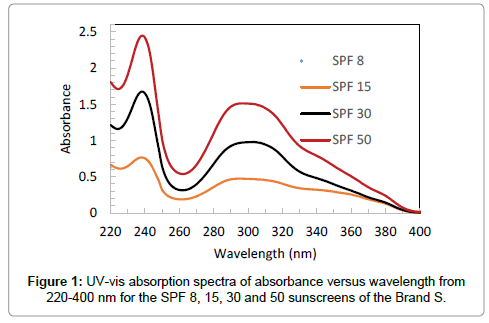
Photo: sunscreen laboratory spectrophotometry UV testing scientific analysis, via www.omicsonline.org
Walk down any pharmacy aisle in the United States and you will find sunscreen products displaying SPF numbers with the confidence of a government-stamped guarantee. SPF 30, SPF 50, SPF 100—the numbers climb higher each season, and with them, consumer confidence. Yet when these products are submitted to independent laboratory analysis under controlled conditions, the relationship between a labeled SPF value and the protection a product actually delivers proves to be far less straightforward than the packaging implies.
At Keystone Labs, testing protocols designed to evaluate sunscreen efficacy go well beyond what a printed number can communicate. What that analysis consistently reveals is a gap—sometimes modest, sometimes significant—between regulatory compliance and real-world performance.
What SPF Actually Measures
The Sun Protection Factor rating is a standardized metric established by the U.S. Food and Drug Administration to quantify how effectively a sunscreen product filters UVB radiation—the portion of the ultraviolet spectrum primarily responsible for sunburn. The number itself represents a ratio: an SPF 30 product, applied correctly, theoretically allows a user to remain in the sun 30 times longer before experiencing UVB-induced erythema than they would without protection.
That theoretical framing matters. The FDA's testing methodology for SPF determination relies on human subjects applying a precise quantity of product—two milligrams per square centimeter of skin—under controlled lighting conditions. The resulting number reflects performance under those specific, idealized circumstances. It does not account for how the product behaves after two hours at the beach, after swimming, after perspiration, or after application at the thinner, uneven coverage most people actually use.
Moreover, SPF says nothing about UVA radiation. UVA wavelengths penetrate more deeply into the skin, contributing to photoaging and playing a documented role in melanoma development. Broad-spectrum labeling is intended to address this, but the FDA's broad-spectrum standard requires only that a product pass a critical wavelength test—it does not mandate a specific level of UVA protection or require that UVA performance be proportional to the stated SPF.
What the Instruments Find
Spectrophotometry is among the most informative tools available for evaluating sunscreen performance in a laboratory setting. The technique measures the absorbance of UV radiation across the full relevant spectrum—typically 290 to 400 nanometers—allowing analysts to construct a detailed picture of where and how effectively a formulation blocks incoming radiation.
When Keystone Labs applies spectrophotometric analysis to commercially available sunscreen products, several patterns emerge with regularity. First, products with identical SPF claims frequently show measurable differences in UVA absorbance profiles. Two SPF 50 lotions from different manufacturers may both satisfy the FDA's broad-spectrum threshold while providing substantially different degrees of UVA attenuation across the spectrum. For a consumer choosing between them based on label information alone, there is no visible indication of this disparity.
Second, the uniformity of UV absorption across the spectrum—what scientists refer to as the UVA/UVB protection ratio—varies considerably between formulations. A product with strong UVB blocking but comparatively weak mid-UVA performance creates what researchers sometimes call a protection gap: the consumer is shielded from sunburn but remains more exposed to the wavelengths associated with deeper tissue damage.
Accelerated Weathering and Photostability
Spectrophotometry under static conditions captures a snapshot of a product's protective capacity. Accelerated weathering tests ask a different question: how does that capacity change over time and under stress?
Photostability testing exposes sunscreen formulations to calibrated UV doses intended to simulate extended outdoor exposure. Some active ingredients—avobenzone being a well-documented example—are inherently unstable when exposed to UV radiation. Without stabilizing agents in the formulation, avobenzone degrades relatively quickly, reducing the product's protective capacity even within a single application window. Laboratory analysis can quantify this degradation, measuring how much UV-absorbing capacity remains after simulated exposure intervals.
The findings from this type of testing are not uniformly alarming, but they are instructive. Certain formulations that perform strongly under initial spectrophotometric analysis show measurable degradation after simulated exposure equivalent to two to three hours of midday sun. Others maintain their absorbance profiles with considerably more stability. The difference lies in formulation chemistry—ingredient selection, stabilizer inclusion, and the physical chemistry of how components interact within the product matrix.
Water resistance claims introduce yet another variable. The FDA permits products to claim water resistance for either 40 or 80 minutes, based on standardized immersion testing. Independent laboratory replication of this testing has found that some products maintain their labeled SPF reasonably well through the required intervals, while others show more significant attenuation. Critically, water resistance testing evaluates SPF retention—it does not evaluate whether broad-spectrum UVA protection is preserved to the same degree after water exposure.
The Application Reality
Laboratory conditions are, by design, controlled. The SPF determination protocol specifies a two-milligram-per-square-centimeter application rate that consumer research consistently shows most people do not achieve in practice. Studies examining real-world application patterns suggest that average consumers apply somewhere between 25 and 50 percent of the recommended quantity.
This matters because SPF protection does not scale linearly with application thickness. Thinner application layers create uneven coverage at the microscopic level, allowing UV radiation to reach the skin through gaps in the protective film. The effective SPF delivered by a half-dose application is not half of the labeled value—it is substantially lower, and the reduction is nonuniform across the spectrum.
Laboratory testing can model this scenario by evaluating product performance at sub-standard application rates. The results reinforce what the physics would predict: the labeled SPF is a ceiling achievable only under precise application conditions, not a baseline that consumers can expect to receive under typical use.
What Informed Sunscreen Selection Requires
None of this analysis is intended to suggest that sunscreen is ineffective or that SPF ratings are meaningless. Products that carry broad-spectrum labeling and meet FDA standards do provide meaningful UV protection, and their regular use is associated with reduced skin cancer risk. The point is that the number on the bottle is one data point in a more complex picture.
For consumers, the practical implications are several. Applying sunscreen generously and reapplying it on schedule—every two hours, or after swimming and sweating—addresses the application-rate and photostability limitations that laboratory testing identifies. Choosing formulations with multiple active ingredients and documented stabilizers provides a more robust protection profile than relying on SPF alone. And treating broad-spectrum labeling as a starting point rather than a guarantee reflects what the science actually supports.
For the industry, independent laboratory analysis serves a clarifying function. Spectrophotometric data and photostability results provide objective benchmarks against which formulation quality can be evaluated—not merely whether a product clears a regulatory threshold, but how it performs across the full range of conditions consumers actually encounter.
At Keystone Labs, that kind of rigorous, instrument-based evaluation is precisely what precision science is designed to provide. The SPF number on a sunscreen label tells part of the story. The laboratory tells the rest.