Dressed for Danger: What Analytical Testing Uncovers in Wrinkle-Resistant Children's Clothing
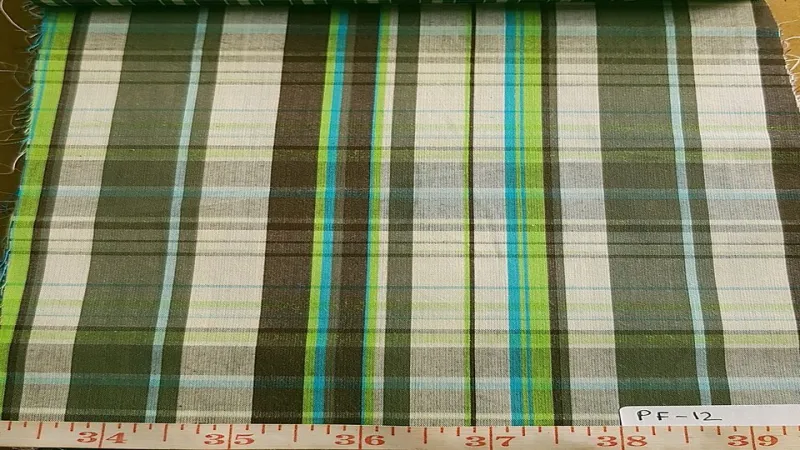
Photo: MadrasFabricPreppy, CC BY-SA 4.0, via Wikimedia Commons
For many parents, the appeal of wrinkle-resistant children's clothing is practical and understandable. School uniforms that hold their shape through a full week, play clothes that emerge from the dryer looking presentable, and dress shirts that require no ironing before a family event — these are genuine conveniences. What the product label rarely communicates, however, is the chemistry that makes those properties possible. Behind the ease of wrinkle-free fabric lies a class of chemical treatments that, under laboratory scrutiny, presents a more complicated picture than marketing language tends to suggest.
At Keystone Labs, our analytical work with textile samples has produced findings that warrant careful attention from parents, pediatric clinicians, and consumer safety advocates. The results point to a persistent and measurable problem: formaldehyde residues in children's garments, present at levels that standard certification processes may not reliably catch.
How Wrinkle Resistance Is Achieved — and at What Cost
The textile industry has used formaldehyde-releasing resins for decades to impart crease resistance, shrink resistance, and dimensional stability to cotton and cotton-blend fabrics. These resins work by forming chemical cross-links within the fiber structure, locking the fabric into shape. The process is effective and inexpensive, which explains its continued prevalence in mass-market apparel manufacturing.
The problem is that formaldehyde does not simply disappear after the finishing process. Residual formaldehyde remains bound within the fabric matrix and can release gradually through friction, moisture, and body heat — precisely the conditions present when a garment is worn against skin. For adults, this presents a dermatological concern. For children, whose skin barrier function is less mature and whose surface-area-to-body-weight ratio amplifies relative exposure, the implications are more significant.
Formaldehyde is classified by the International Agency for Research on Cancer as a Group 1 human carcinogen. At lower exposure levels, it is a well-documented skin sensitizer and respiratory irritant, with particular relevance in cases of eczema, contact dermatitis, and chemical sensitivity.
What Laboratory Analysis Actually Finds
When textile samples are submitted for chemical analysis, the standard method for quantifying formaldehyde content involves extraction followed by spectrophotometric measurement — a process that produces precise, reproducible results. What this process consistently reveals is that many children's garments contain formaldehyde residues at concentrations that fall well above the thresholds considered appropriate for direct skin contact.
Samples tested at Keystone Labs have included school uniform shirts, children's dress pants, and infant sleepwear items, all sourced from mainstream US retail channels. In multiple instances, formaldehyde concentrations in the 100 to 300 parts per million range were detected in garments carrying labels that described them as soft, gentle, or appropriate for sensitive skin. Some items bore third-party certification marks that parents commonly interpret as comprehensive safety endorsements.
These findings are not anomalous. Published research from academic and regulatory bodies in Europe, Japan, and Australia has documented similar patterns across imported and domestically finished textiles. Japan maintains a strict regulatory limit of 16 ppm formaldehyde for garments worn by infants under 24 months. The European Union caps allowable levels at 30 ppm for products intended for direct skin contact. The United States, by contrast, has no federally mandated limit on formaldehyde in finished textile products, leaving the regulatory landscape largely voluntary and inconsistent.
The Certification Gap
One of the more consequential findings from our laboratory work is the degree to which safety certifications fail to address this specific hazard comprehensively. Several widely recognized textile certifications test for a range of harmful substances and are generally rigorous within their defined scope. However, certification audits vary in how they handle formaldehyde — some test only at the point of manufacture, before additional finishing steps that introduce resin treatments, while others apply detection thresholds that differ from the limits established by more protective regulatory regimes.
A garment may carry a recognized certification mark and still contain formaldehyde residues that would be prohibited under Japanese or EU standards. Parents who rely on these labels as proxies for comprehensive chemical safety are working with incomplete information. This is not a criticism of certification programs as a whole; it is a structural limitation that independent analytical testing is uniquely positioned to address.
Certification bodies assess compliance at a point in time and within a defined testing protocol. Laboratory analysis conducted on retail samples — the actual product a child will wear — captures what chemistry persists through the full supply chain, including finishing, shipping, storage, and retail handling.
Exposure Pathways That Amplify Risk
Understanding formaldehyde risk in children's clothing requires consideration of how exposure actually occurs. A child wearing a wrinkle-treated shirt for six to eight hours in a warm classroom is not experiencing brief, incidental contact. The garment is in sustained, direct contact with skin across the torso, shoulders, and arms. Perspiration increases the rate at which residual formaldehyde releases from the fabric. Friction at points like collar edges and waistbands concentrates exposure further.
For children with pre-existing skin conditions — atopic dermatitis affects roughly 13 percent of children in the United States — even moderate formaldehyde exposure can trigger or exacerbate symptoms. In these cases, the connection between clothing chemistry and skin response may go unrecognized, attributed instead to detergent, diet, or environmental allergens.
Repeated laundering does reduce formaldehyde levels in treated fabrics, though the rate of reduction varies depending on fiber type, resin formulation, and wash conditions. New garments present the highest residue levels, which means children are most heavily exposed during the period when parents are most likely to be using a recently purchased item.
What Parents and Clinicians Can Do
In the absence of federal regulatory limits, the burden of protection falls disproportionately on individual consumers. Several practical measures can meaningfully reduce exposure. Washing new garments multiple times before initial wear remains the most accessible intervention, as it removes a significant portion of loosely bound formaldehyde. Selecting fabrics that do not require wrinkle-resistant finishing — linen, untreated cotton, and wool — eliminates the risk at the source.
For families managing pediatric skin conditions, submitting clothing samples for independent laboratory testing provides a level of chemical verification that label claims and certification marks cannot reliably substitute. Knowing the actual formaldehyde concentration in a specific garment removes the guesswork from what is otherwise an opaque supply chain.
Pediatricians and dermatologists evaluating children with persistent or unexplained contact dermatitis may also benefit from incorporating clothing chemistry into their differential assessment. The question of what a child wears — not just what they eat or touch — is a clinically relevant variable that analytical data can help clarify.
The Limits of Trust in Product Labeling
The broader lesson from formaldehyde testing in children's textiles is one that surfaces repeatedly in consumer product analysis: the gap between what a label communicates and what laboratory measurement confirms can be substantial. Phrases like "gentle on skin," "hypoallergenic," and "safe for babies" are marketing characterizations, not analytical certifications. They reflect how a manufacturer positions a product, not what independent chemistry reveals about its composition.
Precision science exists precisely to close that gap. When parents, clinicians, or consumer organizations want to know what is actually present in a product worn directly against a child's body, the answer does not come from packaging — it comes from the laboratory.