Approved on Paper, Questionable in Practice: What Independent Testing Reveals About Supplement Purity
Photo: The U.S. Food and Drug Administration, Public domain, via Wikimedia Commons
For millions of Americans, the presence of an FDA-compliant label on a dietary supplement carries an implicit promise: that the product inside has been rigorously vetted, accurately described, and manufactured under conditions that protect public health. That assumption, while understandable, is not well-supported by the scientific evidence that laboratory analysis continues to produce.
At Keystone Labs, we conduct routine compositional and microbiological assessments of commercially available dietary supplements. What those assessments reveal, with considerable consistency, is that regulatory approval and actual product purity are not the same thing — and the distance between them is wider than most consumers realize.
How FDA Oversight of Supplements Actually Works
The regulatory architecture governing dietary supplements in the United States is fundamentally different from the framework applied to pharmaceutical drugs. Under the Dietary Supplement Health and Education Act of 1994, the FDA does not evaluate or approve supplements before they reach store shelves. Instead, manufacturers bear primary responsibility for ensuring their products are safe and accurately labeled. The agency's enforcement role is largely reactive: it intervenes after problems are identified, rather than screening products at the point of production.
The Current Good Manufacturing Practice regulations, known as cGMPs, do impose meaningful requirements on supplement manufacturers — covering identity testing, contamination controls, and label accuracy. However, compliance with cGMPs is verified through periodic facility inspections rather than systematic product-level testing. A facility can pass an inspection and still ship products that deviate from their labels in ways that no inspector would detect without analytical chemistry.
This structural gap is not a flaw that regulators have overlooked. It is an inherent limitation of a framework that was designed to reduce barriers for supplement manufacturers while placing the burden of safety demonstration on those companies themselves.
What Analytical Testing Actually Finds
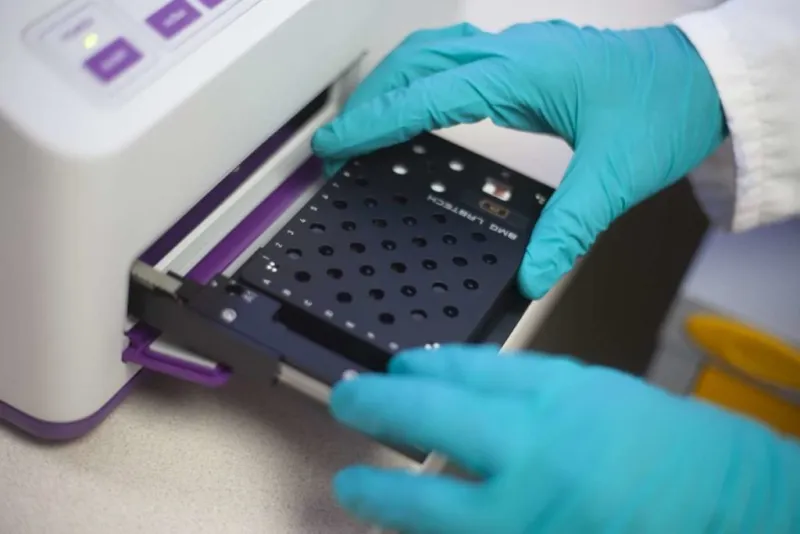
When supplement products undergo independent laboratory analysis — using techniques such as high-performance liquid chromatography, inductively coupled plasma mass spectrometry, and quantitative polymerase chain reaction — the findings frequently diverge from what labels declare.
Among the most common discrepancies our analysts and peer-reviewed literature document are the following:
Ingredient quantity mismatches. Active ingredients are present at concentrations meaningfully above or below what the label specifies. Underdosing renders a product therapeutically ineffective. Overdosing, particularly with fat-soluble vitamins or bioactive botanical compounds, can pose genuine health risks over time.
Undisclosed excipients and fillers. Manufacturers routinely incorporate binders, anti-caking agents, and flow enhancers that do not appear in the ingredient list. While many of these substances are inert for most consumers, some — including certain cellulose derivatives, titanium dioxide, and silicon dioxide compounds — are subjects of ongoing safety inquiry.
Hidden allergens. Gluten, soy, dairy proteins, and tree nut derivatives have been detected in products marketed explicitly as allergen-free. For individuals managing celiac disease, severe food allergies, or immune-mediated conditions, this category of mislabeling carries direct clinical consequences.
Microbial contamination. Yeast, mold, and bacterial counts exceeding acceptable thresholds appear in a meaningful proportion of tested products, particularly in those derived from botanical raw materials. Contamination at these levels does not always produce acute illness, but it represents a failure of the manufacturing controls that cGMP compliance is supposed to guarantee.
Substituted or adulterated botanical ingredients. DNA-based species authentication testing has demonstrated that certain herbal supplements contain plant material from species other than those named on the label — a finding with direct implications for both efficacy and safety.
The Loopholes That Manufacturers Exploit
It would be inaccurate to characterize all labeling discrepancies as intentional fraud. Some arise from supply chain variability, inadequate raw material testing, or insufficient in-process quality controls. However, the regulatory environment does create conditions that allow certain practices to persist.
Because the FDA does not require pre-market submission of compositional data for most supplements, a manufacturer can introduce a new product without any independent confirmation that it contains what it claims. Third-party certification programs — operated by organizations such as NSF International, USP, and ConsumerLab — exist precisely because the federal framework does not fill this role. Yet these certifications remain voluntary, and a substantial portion of the supplement market operates without them.
Additionally, the enforcement resources available to the FDA for supplement oversight are limited relative to the size of the industry. The U.S. dietary supplement market generates revenues exceeding $50 billion annually and encompasses tens of thousands of individual products. The agency's capacity to conduct systematic market surveillance is constrained accordingly.
Why Third-Party Laboratory Testing Matters
The value of independent analytical verification lies in its specificity. A certification seal indicates that a product met a defined standard at a particular point in time and under particular testing conditions. Ongoing laboratory analysis — whether commissioned by consumers, healthcare providers, retailers, or researchers — provides a continuous and product-specific record of what is actually present.
For clinicians advising patients on supplementation, this distinction is consequential. A patient who tests positive for an allergen exposure or experiences unexpected pharmacological interactions may be consuming a supplement that contains undisclosed substances. Without laboratory confirmation of product contents, clinical investigation proceeds with incomplete information.
For consumers, the practical implication is straightforward: the FDA approval framework provides a baseline, not a guarantee. Products that carry cGMP-compliant labeling have been manufactured under conditions that are supposed to prevent the problems described above. Whether those conditions were actually sufficient is a question that only analytical testing can answer.
Building a More Rigorous Standard
At Keystone Labs, our position is that precision matters — particularly when the substances in question are ingested daily by people managing health conditions, taking prescription medications, or caring for children and elderly family members. The supplement industry's regulatory environment places significant trust in manufacturer self-reporting. Laboratory science exists, in part, to verify whether that trust is warranted.
Consumers who want greater confidence in their supplement purchases have several practical options. Seeking products that carry independent third-party certification from recognized testing organizations is a meaningful first step. Requesting certificates of analysis from manufacturers — documents that should reflect lot-specific compositional testing — provides additional transparency. And for individuals with specific medical concerns, commissioning independent laboratory analysis of frequently used products offers the highest level of assurance currently available.
Regulatory approval establishes that a product was manufactured within a compliant system. It does not establish what that product contains. Those are different questions, and only one of them can be answered with a label.