Hidden in Plain Sight: What Spore Counts and Air Sampling Reveal That Visual Mold Inspections Cannot
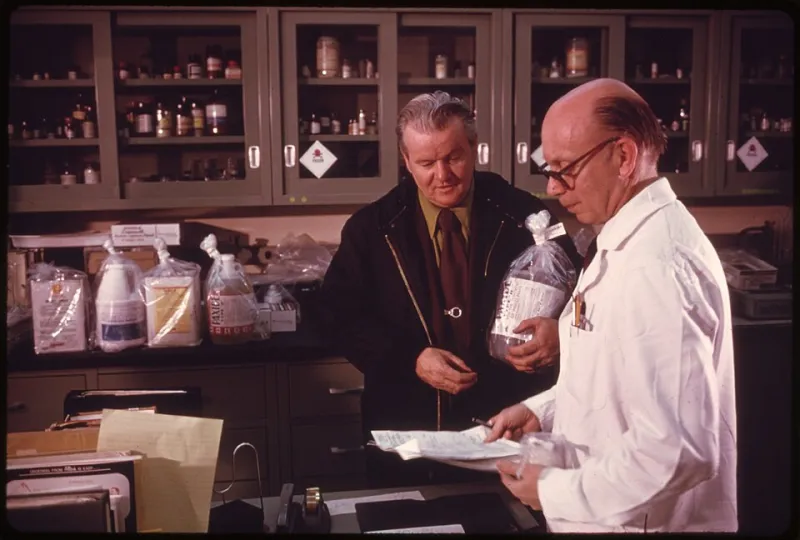
Photo: Dan McCoy, Public domain, via Wikimedia Commons
When a home inspector walks through a property and declares it free of mold, most buyers and homeowners breathe a sigh of relief. That relief, unfortunately, may be premature. The standard visual inspection protocol was designed to identify obvious structural and safety concerns—not to function as a comprehensive environmental health assessment. The result is a significant and often costly gap between what an inspector observes and what a laboratory actually finds.
Understanding that gap requires looking closely at how mold behaves, where it colonizes, and why the tools used in most residential inspections are simply not equipped to detect it at its most dangerous.
What a Standard Mold Inspection Actually Covers
A licensed home inspector in the United States is trained to identify visible signs of water intrusion, staining, and obvious fungal growth on accessible surfaces. This typically means examining attic sheathing, basement walls, crawlspaces, and areas around plumbing fixtures. In many states, inspectors are not required to hold any specific mold certification, and the scope of what they assess varies considerably by jurisdiction and individual training.
When surface swabs are collected—which is not universally standard practice—they are often processed by a basic laboratory that returns a genus-level identification. Knowing that Cladosporium or Penicillium is present on a single surface tells a homeowner remarkably little about the overall fungal burden in the living environment. A surface swab, by definition, can only confirm contamination at the point of contact. It cannot characterize what is circulating through the air or colonizing inside a wall assembly.
Where Mold Hides—and Why It Matters
Fungal colonies are opportunistic. They establish wherever moisture, organic material, and limited airflow converge—conditions that frequently occur in locations inaccessible to a visual sweep. HVAC ductwork is among the most consequential of these sites. A colony growing inside a return air plenum or on the coil housing of a central air handler is not merely a localized problem; it is a distribution system for spores that can reach every room in the structure with each heating or cooling cycle.
Insulation presents a similar challenge. Fiberglass batt and cellulose insulation both retain moisture and provide a substrate that supports fungal growth. Because insulation is concealed within wall cavities and floor assemblies, contamination can persist for years without any surface indication. The same applies to the backside of drywall, the interior of window frames, and the subfloor beneath flooring materials.
In each of these environments, the mold is real, the spore output is real, and the potential health consequences—ranging from chronic respiratory irritation to more serious immunological responses in sensitive individuals—are real. The inspection report, however, may show nothing at all.
What Laboratory Analysis Adds to the Picture
Professional environmental testing approaches this problem differently. Rather than relying exclusively on what is visible, laboratory-based mold assessment uses volumetric air sampling to capture what is actually present in the breathing zone.
Air-O-Cell cassettes and similar impaction samplers draw a measured volume of air across a collection substrate. The sample is then analyzed under microscopy, and a trained analyst enumerates and identifies spores by morphological characteristics. The resulting spore count—expressed as spores per cubic meter of air—is compared against outdoor baseline samples collected simultaneously. This comparative methodology is important: some fungal genera are ubiquitous outdoors, and elevated indoor counts are only meaningful when assessed relative to exterior conditions on the same day.
For more precise identification, particularly when toxic species such as Stachybotrys chartarum are suspected, molecular methods including PCR-based Environmental Relative Moldiness Index (ERMI) testing provide genus and species-level resolution that optical microscopy alone cannot reliably achieve. ERMI analysis, developed by the U.S. Environmental Protection Agency, quantifies the DNA of 36 mold species in settled dust and produces a numeric index that correlates with historical water damage in a structure.
Beyond air and dust sampling, thermal imaging performed in conjunction with laboratory testing can identify moisture reservoirs within building assemblies without destructive investigation—allowing analysts to direct sampling efforts toward areas with the highest probability of hidden growth.
The Cost of Skipping Comprehensive Testing
Homeowners sometimes resist laboratory-based mold assessment because the cost is higher than a standard inspection add-on. This calculation tends to change when the downstream consequences are considered.
Property transactions in which undisclosed mold contamination is discovered post-closing have generated substantial litigation in states including Florida, California, and New York. Remediation costs for HVAC-based contamination or wall cavity colonies regularly run into the tens of thousands of dollars, and costs escalate sharply when the work is deferred. From a health standpoint, the Centers for Disease Control and Prevention acknowledge that indoor mold exposure is associated with upper respiratory symptoms, coughing, and wheezing in otherwise healthy individuals, with more serious effects possible in those with asthma or compromised immune function.
For families with young children, elderly members, or anyone managing a respiratory condition, the argument for comprehensive baseline testing before occupying a new home—or after any significant water event—is straightforward.
What to Ask For When Ordering Mold Testing
Not all environmental testing services are equivalent. When engaging a laboratory for mold assessment, homeowners should confirm that air samples will be analyzed by an accredited laboratory—look for accreditation through the American Industrial Hygiene Association (AIHA) or a state-recognized equivalent. The sampling protocol should include both indoor locations and a contemporaneous outdoor baseline. Results should be provided with a written interpretation by a qualified industrial hygienist or certified indoor environmental professional, not simply a raw data table.
For properties with known water history, a combination of air sampling, ERMI dust analysis, and targeted surface sampling from HVAC components provides the most defensible assessment of true fungal burden.
A visual inspection has its place in the home assessment process. It simply does not have the resolution to answer the question that matters most: what is actually in the air that occupants breathe every day. That answer requires a laboratory.