What's Really in Your Tap Water: The Contaminants Municipal Reports Don't Catch
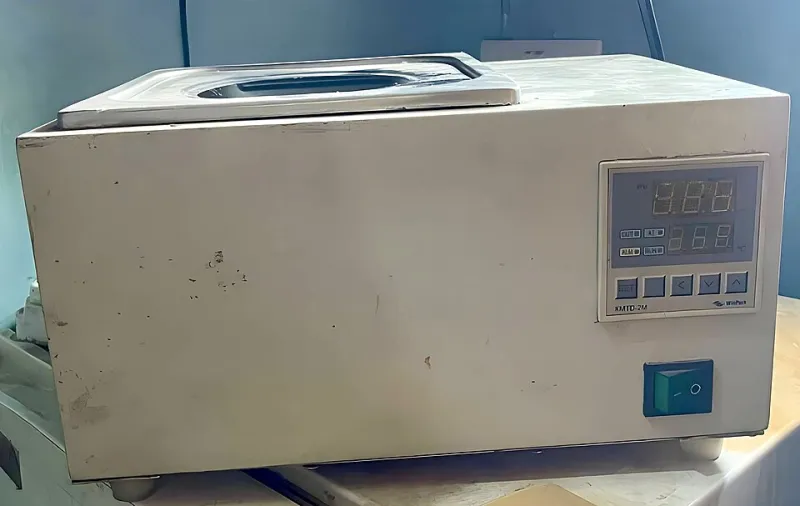
Photo: Confidence24, CC BY-SA 4.0, via Wikimedia Commons
Every year, millions of American households receive an Annual Water Quality Report—commonly called a Consumer Confidence Report—from their local utility provider. These documents are required by the Environmental Protection Agency under the Safe Drinking Water Act, and for many families, they serve as the primary reassurance that their tap water is safe. The problem is that compliance-based testing and comprehensive safety analysis are not the same thing.
At Keystone Labs, our water quality analysts routinely process residential water samples that reveal contaminants well outside the scope of standard municipal testing protocols. The findings are not always alarming, but they are consistently instructive—and they underscore a fundamental truth: regulatory minimums are not the same as scientific thoroughness.
The Gap Between Compliance and Comprehensive Analysis
Municipal water systems in the United States are tested against a defined list of regulated contaminants established by the EPA. As of the most recent regulatory framework, that list includes approximately 90 substances. While this represents a meaningful baseline, the EPA's own estimates suggest that thousands of chemical compounds have been detected in drinking water sources across the country—many of which have no current regulatory standard.
This gap exists for a straightforward reason: rulemaking is a slow process. A contaminant must be studied, risk-assessed, and politically navigated through regulatory channels before it earns a legal limit. In the interim, it may appear in household water supplies without triggering any compliance alert.
Per- and polyfluoroalkyl substances—commonly known as PFAS—offer a recent and well-documented example. These synthetic chemicals, used in everything from nonstick cookware coatings to firefighting foam, persisted in water supplies for decades before the EPA began the process of establishing enforceable limits. Communities near military installations and certain manufacturing facilities were particularly affected, and many residents had no way of knowing through standard utility reports alone.
What Residential Testing Has Revealed
Keystone Labs has conducted independent water quality analyses for residential clients across a range of geographic settings—urban, suburban, and rural—and the results illuminate several recurring patterns.
Lead from aging infrastructure remains one of the most prevalent findings, particularly in homes built before 1986. Although the EPA's Lead and Copper Rule requires utilities to monitor lead levels at selected sample sites, this testing does not necessarily reflect conditions at an individual property. Older service lines, interior plumbing, and even brass fixtures can leach lead into water that tested clean at the municipal level. In one case reviewed by our laboratory team, a family in the mid-Atlantic region with a home built in the 1940s submitted a water sample following the purchase of a residential water filter. Their tap water contained lead concentrations nearly four times higher than the EPA's action level of 15 parts per billion—despite their utility's most recent compliance report showing no lead violations.
Nitrates from agricultural runoff represent another category of concern, particularly for clients in rural communities and agricultural regions such as the Midwest and Central Valley of California. Nitrates enter groundwater through fertilizer application and livestock operations. While municipal systems serving large populations monitor for nitrates, private wells—used by approximately 43 million Americans—are entirely outside public utility oversight. Elevated nitrate levels are associated with methemoglobinemia, a condition of particular risk to infants, and our laboratory has identified exceedances of the EPA's maximum contaminant level in private well samples submitted by clients who had never had their water independently tested.
Naturally occurring arsenic is another finding that surprises many homeowners. Arsenic is present in geological formations throughout the United States, and it leaches into groundwater in regions spanning New England, the Southwest, and the upper Midwest. Long-term exposure to arsenic concentrations even near regulatory limits has been associated with increased cancer risk. Because private well owners bear full responsibility for their own water quality monitoring, many go years without knowing their arsenic exposure level.
How Laboratory Analysis Works
Professional water analysis at a certified laboratory is a fundamentally different process from the rapid-result test strips or mail-in kits marketed to consumers. At Keystone Labs, water samples submitted for comprehensive residential analysis are processed using validated methodologies that include inductively coupled plasma mass spectrometry for heavy metals detection, ion chromatography for anion analysis, and EPA-certified methods for microbiological contaminants.
Sample collection protocol matters as much as the analytical method itself. Clients are provided with detailed instructions for collecting first-draw samples—water that has been sitting in pipes for at least six hours—because this method is most likely to capture contaminants that have leached from plumbing materials. Improper collection can meaningfully affect results, which is one reason consumer-grade test kits, which offer little guidance on collection conditions, frequently produce unreliable data.
Chain-of-custody documentation accompanies every sample through our facility, ensuring that analytical results are legally defensible and scientifically traceable. This level of rigor matters not only for peace of mind, but for situations where results may inform legal action, real estate transactions, or medical consultations.
What Homeowners Should Test For
The appropriate panel of tests depends on several variables: the source of your water (municipal supply versus private well), the age of your home, your geographic region, and any nearby industrial or agricultural activity. That said, a foundational residential water quality panel should typically include:
- Heavy metals (lead, arsenic, cadmium, mercury, chromium)
- Nitrates and nitrites
- Coliform bacteria and E. coli (particularly for well water)
- pH, hardness, and total dissolved solids (general water chemistry)
- PFAS compounds (especially relevant for communities near military bases, airports, or industrial sites)
- Volatile organic compounds (VOCs) (relevant for homes near dry cleaners, gas stations, or industrial zones)
For private well owners, annual testing is a broadly recommended baseline. For municipal water customers, testing at the tap—rather than relying solely on utility reports—is advisable when a home has older plumbing, when water quality has changed noticeably in taste or appearance, or following any local infrastructure disturbance such as pipe replacement or flooding.
Taking Action on Your Results
A laboratory report is only valuable if it informs action. When results indicate elevated contaminants, the appropriate response depends on the specific substance and concentration involved. For lead, certified point-of-use filters using NSF/ANSI Standard 53-certified media are an effective mitigation strategy for many households. For arsenic or nitrates, reverse osmosis systems have demonstrated reliable reduction performance in independent testing.
In cases of microbiological contamination, shock chlorination or UV disinfection may be appropriate for well systems, though these interventions should be guided by a water quality professional familiar with the specific findings.
Scientific analysis does not end with the receipt of a report—it begins there. At Keystone Labs, our team is available to help clients interpret results and understand the practical implications of their findings. Precision science, applied to one of the most fundamental aspects of daily life, is not an abstraction. It is the foundation upon which sound health decisions are built.