Certified but Not Safe: How Laboratory Testing Exposes Gluten Contamination That Approval Seals Cannot Guarantee
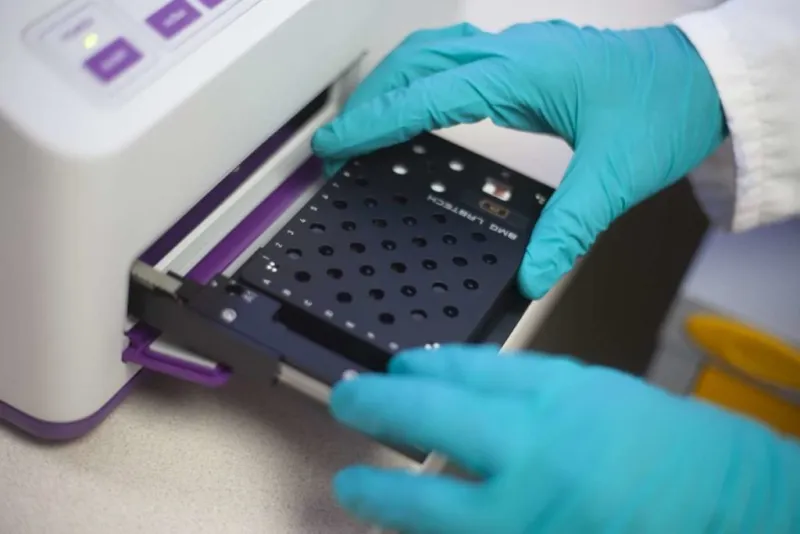
Photo: gluten free food products laboratory testing analysis, via www.murphyandson.co.uk
A certification mark on a gluten-free product offers reassurance, but laboratory analysis frequently tells a more complicated story. For the roughly three million Americans living with celiac disease, trace gluten levels that fall beneath the threshold of standard certification protocols can still trigger serious immune responses. Understanding the analytical gap between approved labeling and verified purity is not a matter of consumer skepticism — it is a matter of clinical safety.
What Certification Actually Measures
In the United States, the FDA defines a "gluten-free" food product as one containing fewer than 20 parts per million (ppm) of gluten. This threshold was established based on a body of scientific evidence suggesting that most individuals with celiac disease can tolerate gluten at or below this concentration without measurable intestinal damage. Third-party certification organizations — including those operating under widely recognized seals found on grocery store shelves — generally adopt this same 20 ppm standard, though some apply a more conservative threshold of 10 ppm.
Certification programs typically evaluate a manufacturer's processes, ingredient sourcing, and facility controls through documentation review and periodic audits. What they do not do, in most cases, is conduct continuous, batch-level analytical testing of finished products. The certification mark on a package reflects a process assessment, not necessarily a verified chemical measurement of the item a consumer is purchasing on any given day.
This distinction is significant. A facility that passes an annual audit may still experience cross-contamination events during production runs occurring months later — events that would never appear in the certification record.
The Manufacturing Reality Behind the Label
Shared production lines represent one of the most persistent sources of gluten cross-contamination in certified products. A facility that manufactures both conventional wheat-based products and gluten-free alternatives on the same equipment — even with rigorous cleaning protocols between runs — introduces a statistical probability of residual contamination that visual inspection and standard swab testing cannot reliably quantify.
Airborne flour particulates present an additional variable. In facilities where wheat flour is milled, mixed, or handled in open environments, gluten proteins can remain suspended in the air and settle onto surfaces, packaging, or exposed product batches. Standard environmental monitoring programs are not always designed to detect these low-level, intermittent contamination events.
Ingredient supply chains add yet another layer of complexity. A certified gluten-free product may incorporate oats, starches, or grain-derived additives sourced from suppliers whose own facilities handle gluten-containing grains. Even when those ingredients are independently certified, the compounding risk across multiple supply chain nodes can elevate the contamination probability in the final product.
What Sensitive Analytical Methods Reveal
Laboratory testing using enzyme-linked immunosorbent assay (ELISA) methodology — specifically the R5 sandwich ELISA recognized by international food safety bodies — can detect gluten at concentrations well below the 20 ppm regulatory threshold. Some validated assay configurations reliably quantify gluten at levels as low as 1 to 3 ppm in finished food matrices.
When independent laboratory analysis is applied to commercially certified gluten-free products, the results are not always consistent with the claims on the packaging. Published research and independent testing surveys have identified products bearing certification seals that nonetheless contained measurable gluten above 5 ppm, and in some cases above the 20 ppm regulatory limit entirely. These findings do not necessarily indicate fraud or negligence — they reflect the inherent limitations of a certification model built around process verification rather than product-level chemical confirmation.
Liquid chromatography-mass spectrometry (LC-MS/MS) offers an additional layer of analytical precision, enabling laboratories to identify and quantify specific gluten peptide sequences at trace concentrations. This methodology is particularly valuable when ELISA results are ambiguous or when a product's matrix — high fat content, fermented ingredients, or heavily processed components — may interfere with immunoassay performance.
Why the 20 ppm Threshold Is Not Universal
The regulatory threshold of 20 ppm was designed as a population-level safety standard, not a guarantee of individual tolerance. Clinical research indicates that a meaningful subset of celiac disease patients experience measurable intestinal inflammation — confirmed by biopsy or serological markers — when exposed to gluten concentrations between 1 and 10 ppm consumed consistently over time. For these individuals, a product that is technically compliant with FDA labeling requirements may still be clinically problematic.
Patients who remain symptomatic despite strict adherence to a certified gluten-free diet are sometimes described in the clinical literature as having non-responsive celiac disease. In a proportion of these cases, the actual driver of continued symptoms is not a separate underlying condition — it is ongoing, low-level gluten exposure from products assumed to be safe based on their labeling.
Diagnostic clarity in these situations requires more than dietary recall. It requires quantitative data on the actual gluten content of the specific products a patient is consuming.
The Role of Independent Laboratory Analysis
For consumers with celiac disease, refractory symptoms, or documented gluten sensitivity, independent laboratory testing of frequently consumed products provides a level of verification that certification marks alone cannot offer. Submitting product samples to an accredited analytical laboratory — one employing validated ELISA or mass spectrometry methods — generates quantitative gluten concentration data specific to the batch in question.
This approach is particularly relevant when a patient's clinical picture does not align with their reported dietary compliance. Gastroenterologists and registered dietitians working with celiac patients are increasingly incorporating laboratory food testing as a diagnostic and management tool, particularly when standard interventions have not produced expected outcomes.
For food manufacturers, periodic third-party batch testing serves a complementary function. It provides an independent validation layer that process-based certification cannot replicate, and it generates documented evidence of product purity that can inform both quality control programs and consumer transparency communications.
Precision Where It Matters Most
Certification marks serve a legitimate and useful purpose in the food marketplace. They signal that a manufacturer has made a meaningful commitment to gluten-free production practices and has submitted to external process review. For most consumers with mild gluten sensitivity, that level of assurance may be entirely sufficient.
For individuals with confirmed celiac disease — particularly those who remain symptomatic, who have elevated antibody titers despite dietary adherence, or who are managing the condition in children — the margin for error is considerably narrower. In that clinical context, the difference between a certification seal and a verified analytical measurement is not a technicality. It is a meaningful distinction with real health consequences.
Laboratory science exists precisely to close the gap between what a label claims and what a product actually contains. When the stakes are physiological, that gap deserves to be measured.